
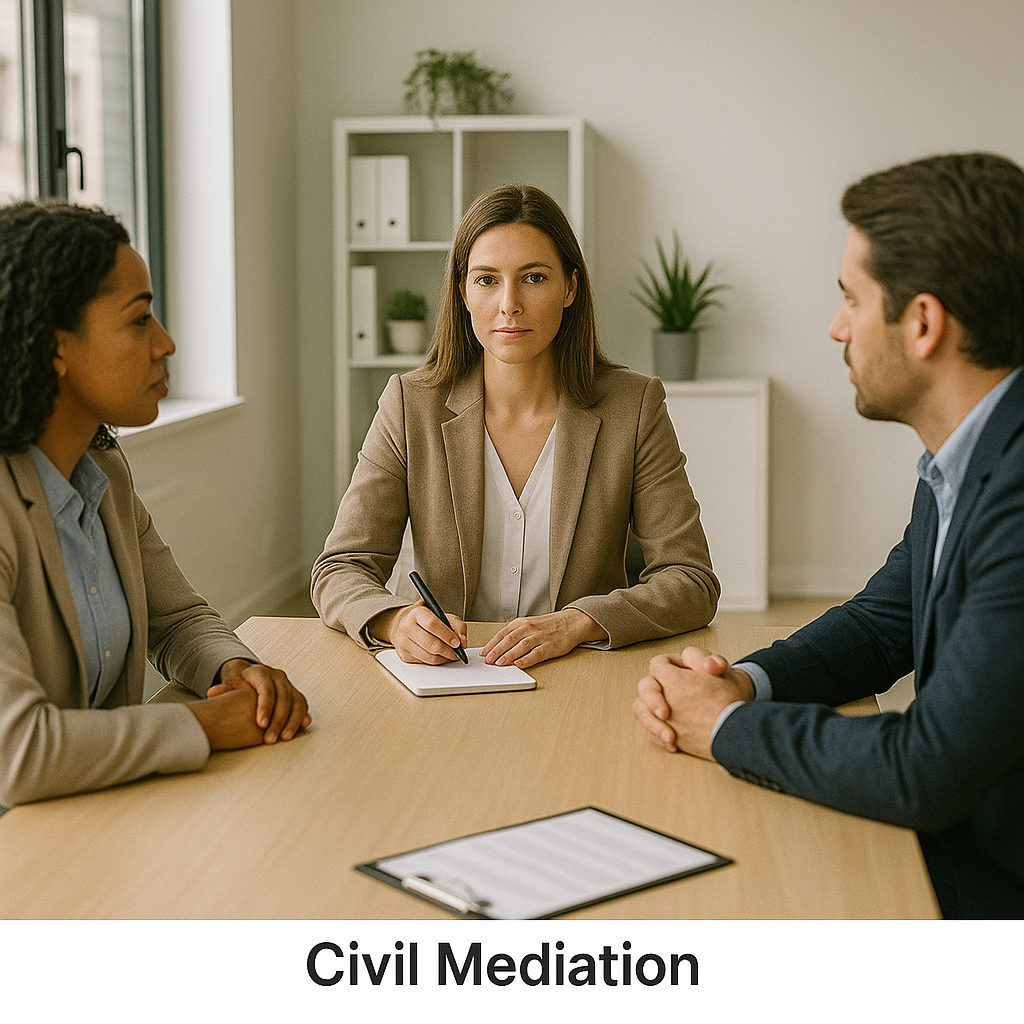
Civil Mediation – Expert Resolution Across the UK
What Is Civil Mediation?
Civil mediation is a voluntary and structured process. An independent mediator helps people in dispute
reach a practical agreement. The parties stay in control. A judge does not impose an outcome. As a result, solutions fit the facts and the people involved.
At Echelon Resolution and Investigation Services, a division of Echelon Dynamics Group Ltd, we deliver civil mediation across the UK.
From our base in Cannock, we serve individuals, families, and organisations nationwide. We work quickly. We keep the process fair. And we protect confidentiality at every step.
Why Choose Civil Mediation Over Litigation?
Litigation is public, slow, and expensive. It often damages relationships. It also hands control to the court. By contrast, civil mediation offers clear advantages:
Lower cost. Fees are a fraction of typical court costs.
Speed. Many matters resolve in a single day.
Confidentiality. Discussions stay private.
Control. The parties shape the outcome.
Better relationships. Dialogue replaces conflict.
Therefore, UK courts and legal professionals frequently recommend mediation before trial. Refusing a reasonable proposal can even affect cost awards. Mediation is not a sign of weakness. It is a sign of sensible risk management.
What Disputes Does Civil Mediation Cover?
Civil mediation suits many situations. It works best where parties want a swift, fair, and private solution.
Property and land: boundaries, rights of way, landlord–tenant issues.
Contracts: performance, delivery, and payment disputes.
Neighbour issues: noise, access, nuisance, or maintenance.
Inheritance and probate: will validity and estate distribution.
Consumer complaints: quality, refunds, and service levels.
Other civil matters: almost any non‑criminal dispute.
Our Civil Mediation Process
Our process is clear and predictable. However, it remains flexible enough to suit the dispute.
- Initial enquiry: call us on 01543 52 37 37 or use our contact form. We answer questions and explain fees.
- Agreement to mediate: the parties confirm confidentiality and ground rules.
- Preparation: we review key documents and clarify the issues. We also agree the schedule.
- Mediation day: we begin with a joint session. Private meetings follow. The mediator then supports negotiation.
- Resolution: if you reach agreement, we record the terms in writing. You may choose to make them legally binding.
Because every dispute is unique, timing can vary. Some mediations finish in half a day. Others take longer. We pace the work so that progress remains steady and constructive.
The Mediator’s Role
The mediator is neutral. They do not decide the case. Instead, they manage the conversation. They ensure balance. They help each side test options. They also reality‑check risks and costs. Importantly, they keep the process confidential and respectful.
How to Prepare for Civil Mediation
Preparation improves outcomes. Use this short checklist to get ready:
Define your aims. Decide what a good outcome looks like.
List key facts and dates. Keep notes short and clear.
Gather essential documents. Avoid large, unfocused bundles.
Consider best and worst alternatives to a negotiated agreement.
Think about non‑financial terms. For example, timing, confidentiality, or future conduct.
In addition, speak with any advisors in advance. Agree who will attend and what authority they hold.
Costs of Civil Mediation
Civil mediation is cost‑effective when compared with litigation. Pricing depends on complexity, the number of parties, and session length. We keep fees transparent and fair.
Want full details? See our Pricing for day rates, inclusions, and travel policy. Or call 01543 52 37 37 for a tailored quote.
Related Services
Commercial Mediation – for business and shareholder disputes.
Workplace Mediation – for employee and team conflict.
Workplace Investigations – independent fact‑finding for employers.
FAQs – Civil Mediation
Is civil mediation legally binding?
Not by default. However, once the parties sign a written settlement, it can be enforceable. Many clients ask their solicitors to convert heads of agreement into a consent order where appropriate.
Do I need a solicitor to attend?
No. You may attend alone or with legal support. Many mediations succeed without lawyers present. That said, legal advice can be helpful when drafting terms.
What if we do not agree?
You may still go to court. Mediation preserves your legal rights. Even if a full deal is not reached, partial agreements often narrow the issues.
Is mediation suitable for high‑conflict cases?
Often, yes. The mediator manages pace and structure. Private meetings allow difficult messages to be tested safely.
Where does mediation take place?
We offer secure online sessions and in‑person venues. We cover the Midlands and the wider UK.